
Building a new home in Kelowna is an exciting milestone. But before construction can begin, there’s an important step you can’t skip: securing that building permit.
A building permit is an official approval from the City of Kelowna that authorizes you to begin construction. It confirms that your project meets the BC Building Code, local zoning bylaws, and safety standards. Without one, you can’t legally build your dream home.
As such, knowing how to apply for a building permit saves you time, money, and stress. It also helps you avoid costly mistakes, such as stop-work orders, fines, or having to redo unpermitted work.
In this guide, we walk you through exactly how to get a building permit in Kelowna step by step.
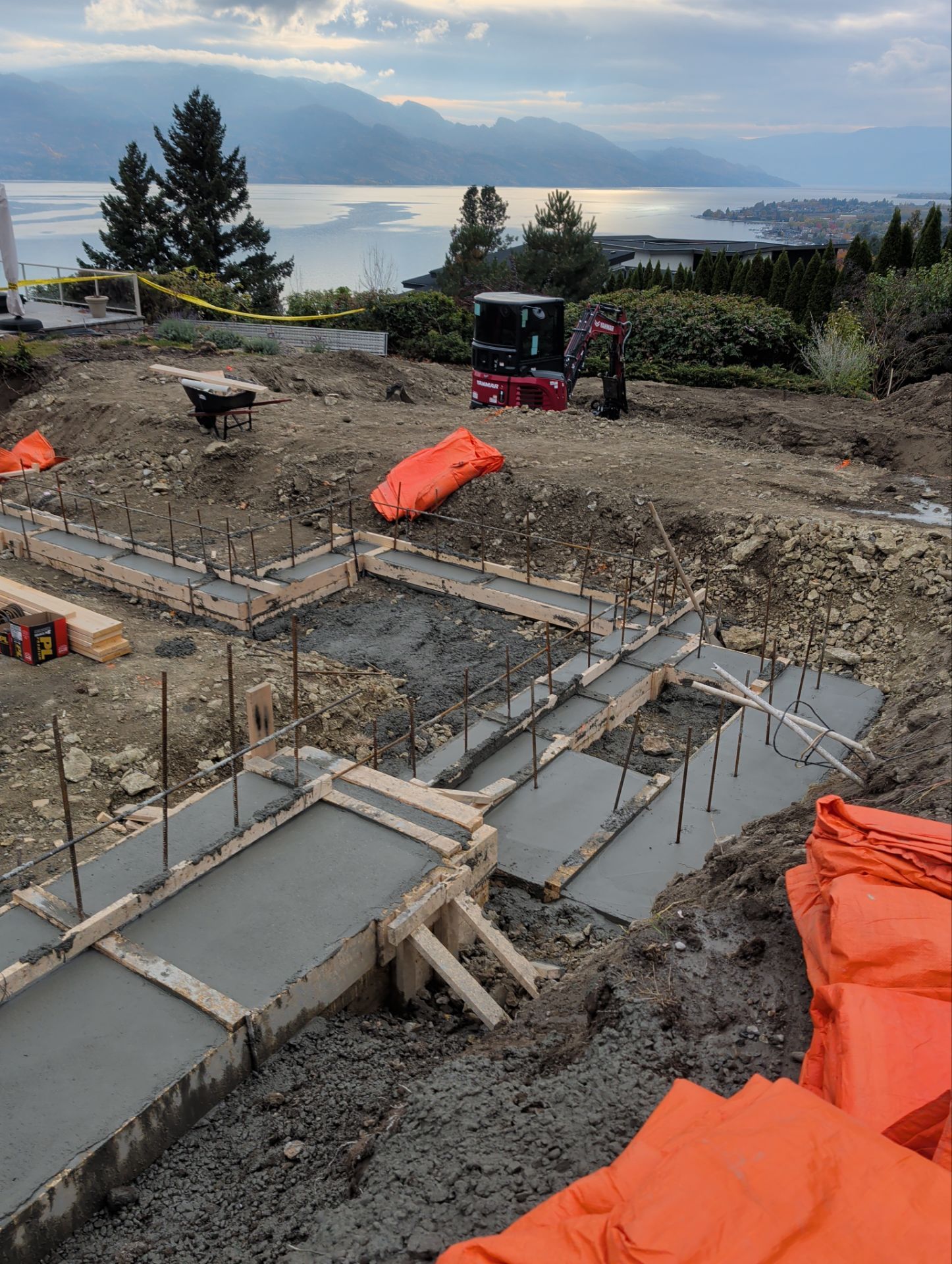
Applying For A Building Permit in Kelowna
Step 1: Confirm Your Property’s Eligibility in Kelowna
Before spending money on design work or documentation, make sure your project is eligible for a building permit in Kelowna.
New Custom or Single Family Home
Check your zoning designation and confirm your lot meets minimum size requirements. Review setback rules, height restrictions, and allowable lot coverage. The City of Kelowna’s online mapping tools can help. You can also contact the Planning Department directly for guidance.
Carriage Home
Your property must be zoned to allow a carriage home. Lot size, setbacks, and owner-occupancy requirements all apply. Use the City’s online tools or review the Carriage House Bulletin to confirm eligibility before moving forward.
Secondary Suites
Secondary suites are self-contained units built within an existing or new single-family dwelling. Before anything else, confirm your property qualifies. Key eligibility requirements include:
- Your lot must be zoned to permit a secondary suite
- The suite can’t exceed 90m² (968 ft²) in total floor area
- Lots under 830m² must be connected to the municipal sewer
- One dedicated off-street parking stall is required solely for suite use
Heads up: Secondary suites can’t be located in apartments, boarding houses, or lodging houses. They must be subordinated to the principal dwelling unit.
Renovation or Addition
Confirm whether your planned work requires a permit in the first place. For instance, minor interior renovations may not. However, structural changes, additions, and exterior work almost always do. When in doubt, contact the City’s Building and Permitting Department.
Small Multi-Family or Townhome
Zoning must permit multi-family development on your lot. Density, setbacks, and parking requirements all factor in. So, consult the Planning Department early. These projects often require additional approvals before a building permit application can even begin.
Step 2: Develop Your Design and Home Blueprints
Once eligibility is confirmed, it’s time to develop your plans. This is where your project starts taking real shape. It’s best to work with a qualified designer or architect familiar with Kelowna’s building requirements.
Remember that generic plans won’t cut it. Your drawings need to meet the BC Building Code and align with local bylaws.
New Custom or Single Family Home
Your drawing package must include:
- Site plans
- Floor plans for all levels
- Elevation drawings from all four sides
- Foundation and structural details
- Electrical and plumbing layouts
Kelowna also requires a truss package complete with future solar panel building, Adaptability Backing 2024 drawings, and Lateral Bracing 2024 drawings. Energy efficiency specifications under BC’s 9.36 requirements must also be included.
Carriage Home
All of the above applies to carriage homes as well. Your site plan must clearly show both the primary dwelling and the carriage home. Ensure the design reflects setback requirements and owner-occupancy conditions.
Secondary Suites
Your design must meet specific livability and safety standards set by the BC Building Code and the City of Kelowna. Your plans should include:
- Site plan showing designated suite parking, lit pathway to suite entrance, and pathway dimensions (minimum 860mm wide)
- Detailed floor plans labelling each room’s function, window sizes, smoke alarms, and CO detectors
- Cross-sections showing wall, floor, and ceiling assemblies, including fire separations and insulation
- Elevation drawings from all four sides
Alternatively, review the city’s Secondary Suite Requirements Bulletin before finalizing your drawings.
Renovation or Addition
Scaled architectural drawings are required for most additions and exterior renovations. A site plan is needed for additions and decks. Interior renovations typically don’t require a site plan, but structural drawings may still be needed depending on the scope of work.
Small Multi-Family or Townhome
Expect a more comprehensive drawing package. Site plans, unit floor plans, shared space layouts, parking, and utility plans will all be required. We recommend hiring a registered professional early to guarantee your drawings meet Kelowna’s multi-family standards.
Step 3: Gather Required Documentation for Your Building Permit Application
A complete building permit application requires several supporting documents. Missing even one can delay your application.
New Custom or Single Family Home
Prepare the following for your home building application:
- State of Title, current within the last 30 days, including all covenants, easements, and right-of-ways
- Homeowner Protection Office (HPO) warranty documentation
- Structural and Geotechnical schedules and drawings (Schedule B, D, and Insurance), if applicable
- 9.36 Energy efficiency specifications
- Solar panel design on the roof truss layout
- Water letter from your irrigation district, if applicable
- Septic approval, if applicable
- Developer’s approval, if applicable
Tip: Download the New Single Family Dwelling Checklist directly from the City of Kelowna’s website. Use it as your document checklist before submission.
Carriage Home
In addition to the aforementioned checklist, review the Carriage House Bulletin and complete the Carriage House Checklist. These are available on the City of Kelowna’s building permits page.
Remember that proof of owner-occupancy commitment is a firm requirement for carriage home applications. Don’t overlook it.
Secondary Suites
Secondary suite applications have their own documentation requirements. For example, you need a site plan showing lot dimensions, driveway location, a suite parking stall, and a lit pathway.
If your suite is in a strata property, a letter of approval from the Strata Corporation is required before a building permit will be issued. Don’t leave this step to the last minute, as strata approvals can take time.
Renovation or Addition
The required documents vary by scope. Additions and decks require a current State of Title. Structural drawings with a registered professional’s seal are needed where structural changes are involved. Interior renovations have a lighter documentation requirement—but always confirm with the City first.
Small Multi-Family or Townhome
Expect a more extensive documentation package for this kind of project. Review the city’s checklist with your design team and a registered professional early to ensure nothing is amiss before submitting.
Step 4: Submit Your Home Building Application
With your documents in order, you’re ready to apply for a construction permit. Kelowna’s building permit applications are submitted through the City’s permitting portal here.
New Custom or Single Family Home
Submit your complete application package online. If your scaled drawings are larger than 11×17, two complete hard copy sets are required. These can be delivered to City Hall, 2nd Floor, addressed to the Application Centre.
We suggest that before submitting, you do one final pass through your checklist. Incomplete applications are a leading cause of processing delays, and they’re entirely avoidable.
Carriage Home
Submit your application through the same portal. Make sure both your primary dwelling and carriage home documentation are included in a single complete package. Partial submissions will stall your application.
Renovation or Addition
Renovations and additions are smaller in scope, but that doesn’t mean you should be less careful. Submit all required drawings and documentation together. Hard copies are only required if your scaled plans exceed 11×17.
Small Multi-Family or Townhome
Given the complexity of these projects, we strongly recommend scheduling a pre-application meeting with the City of Kelowna before submitting. This helps identify any gaps early and avoids back-and-forth after submission.
Note: Application fees are based on the construction value of your project. Fees can range from several hundred to well over a thousand dollars. So, budget accordingly.
Step 5: Understand the Plan Review Process
Once submitted, City of Kelowna staff review your application for compliance with the BC Building Code and local bylaws. This is called the plan review process.
For straightforward applications, expect a review period of 3 to 6 weeks. More complex projects, or those requiring variances, will take longer.
During this time:
- Staff check your drawings for code compliance
- The city verifies zoning and land use
- Supporting documents are reviewed for completeness
Note: You won’t need to do much during this stage. But stay available. Reviewers may reach out with questions or requests for clarification.
Step 6: Address Any Deficiencies in Your Application
If reviewers identify issues with your application, you’ll receive a deficiency letter. It will outline exactly what you need to correct before the city can approve your building permit.
Don’t be discouraged if/when you get one of these. In our experience, deficiency letters are fairly common, even on well-prepared applications.
Tackling one is simple. Here’s what you should do:
- Review the letter carefully with your designer or architect
- Make the required corrections to your drawings or documents
- Resubmit the revised package promptly
Remember to respond to deficiencies promptly. Delays in resubmission extend your overall timeline. So, the faster you act, the sooner your permit moves forward.
Step 7: Receive Your Building Permit
Once approved, you’ll receive your official building permit. Now you have the green light to begin construction. Your permit package will include:
- Approved stamped drawings
- Inspection schedule requirements
- A permit placard to display on the site
Remember: Don’t start construction before your permit is in hand. Unpermitted work can result in stop-work orders, fines, and costly remediation. It’s simply not worth the risk.
Further, keep your stamped drawings on the building site at all times. Later, inspections will need to reference them throughout the build.
Step 8: Schedule Required Inspections
Obtaining your building permit doesn’t mean you’ve crossed the finish line just yet. Inspections are still required throughout construction to ensure everything is up to code.
Schedule each inspection as the relevant work is completed. Don’t get ahead of yourself. Starting the next phase before passing an inspection can cause serious setbacks.
Typical inspection points include:
- Foundation and footing
- Framing and structural
- Insulation and building envelope
- Plumbing rough-in
- Electrical rough-in
- Final occupancy inspection
During this stage, we recommend keeping a running inspection log on site. It helps keep your build organized and ensures nothing gets missed before occupancy is finally granted.
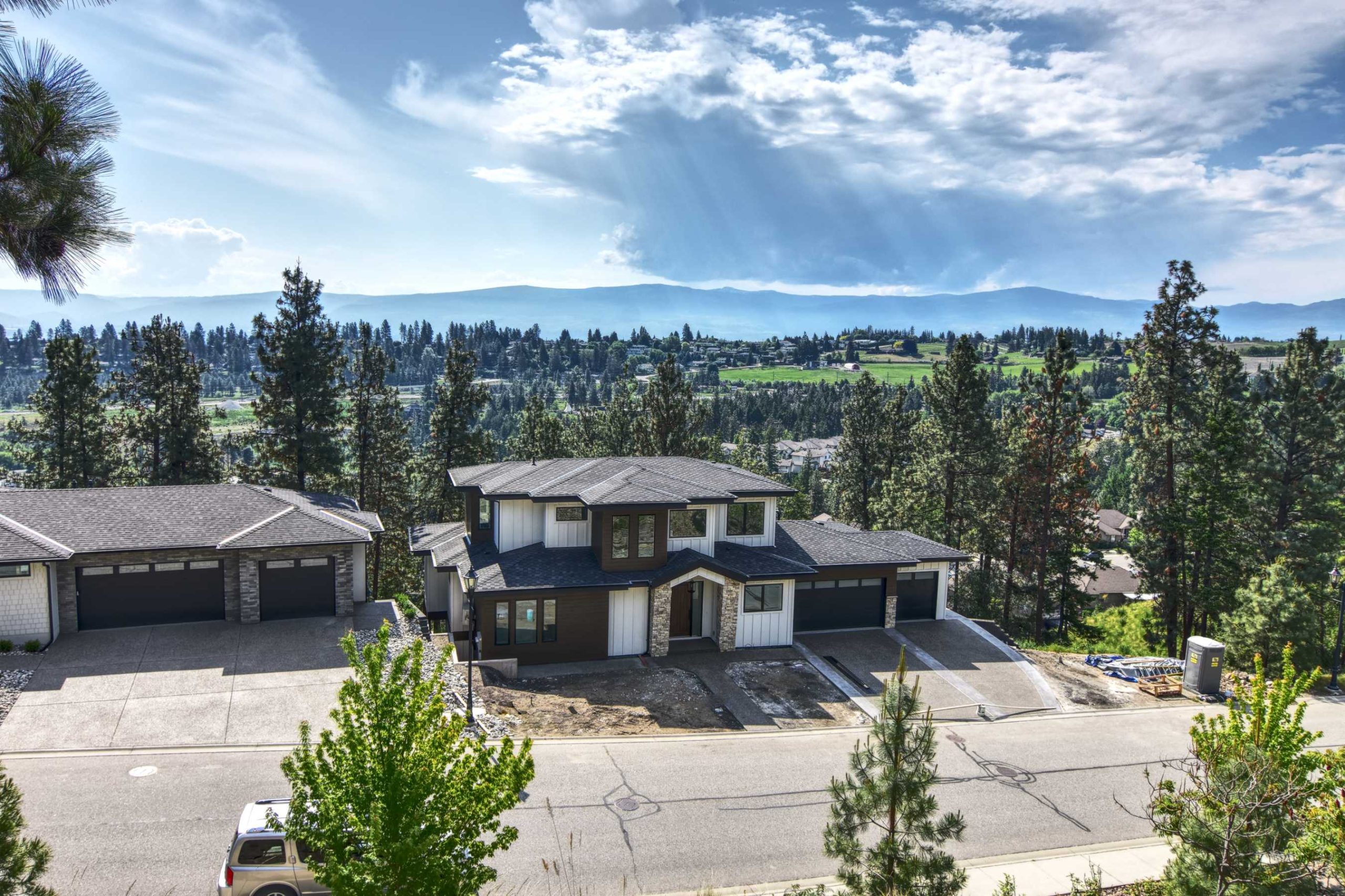
Build Your Dream Home With DeGroot Custom Homes
Going through the building permit process in Kelowna takes time, attention to detail, and a solid understanding of local regulations. And that’s where our team comes in.
Whether you’re building a custom home, adding a carriage home, or planning a renovation, our team has the experience to guide you through every step.
We know Kelowna’s permitting requirements inside and out. We work closely with the city to keep your project moving forward—on time and up to standard code.
Ready to get started? Contact DeGroot Custom Homes today, and let’s bring your vision to life.